Draa Valley Desert Trek – 8 Days in the Moroccan Sahara
Draa Valley desert trek: journey south of Zagora into the vast landscapes of the Moroccan Sahara, where palm-filled oases, mud-brick villages, desert plateaus and sweeping dunes shape one of southern Morocco’s most beautiful trekking regions. This Morocco desert trek follows the Drâa Valley through remote scenery and traditional villages, with the support of a local team and camel caravan carrying the luggage between bivouacs.
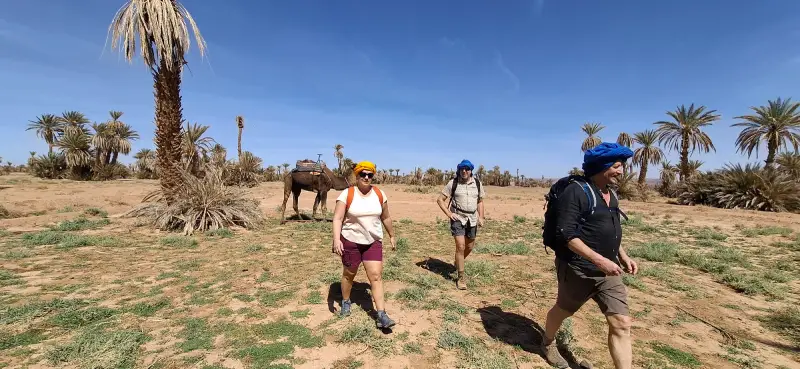
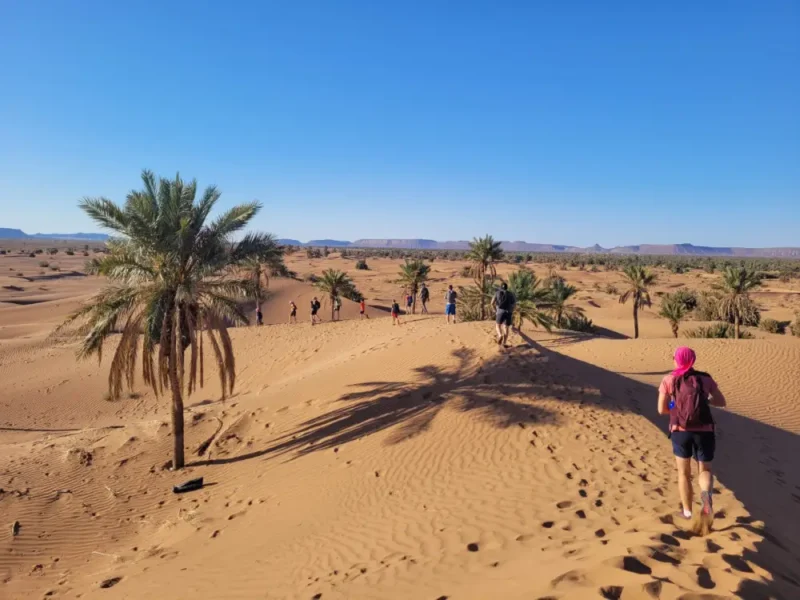
Along this Draa Valley trek, days are spent walking between dunes, regs and palm groves, while evenings bring spectacular sunsets, star-filled skies and nights in the heart of the desert. This authentic Moroccan Sahara trek also offers the chance to discover the traditions of the Nouaji camel-driving nomads, descendants of ancient caravan guides. Combining desert hiking in Morocco, cultural encounters and the atmosphere of a camel trek in Morocco, the journey offers a complete immersion in the landscapes and traditions of the Moroccan Grand South.
⭐⭐⭐⭐⭐ 5.0/5 — 30 customer reviews – read the testimonials
Comfort :
Duration : 8 Days
Price from : $610 per person

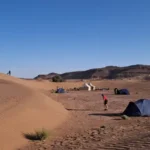
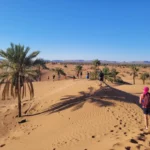
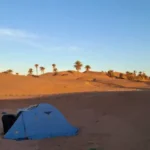
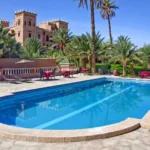
Detailed Itinerary – Draa Valley Desert Trek
Day 1: Arrival in Marrakech
Arrival at Marrakech airport and transfer to your hotel. Depending on your arrival time, enjoy free time to discover Marrakech, its lively medina, traditional souks and cultural atmosphere.
Day 2: Marrakech – Draa Valley Trek – Bouygaywarne Dunes
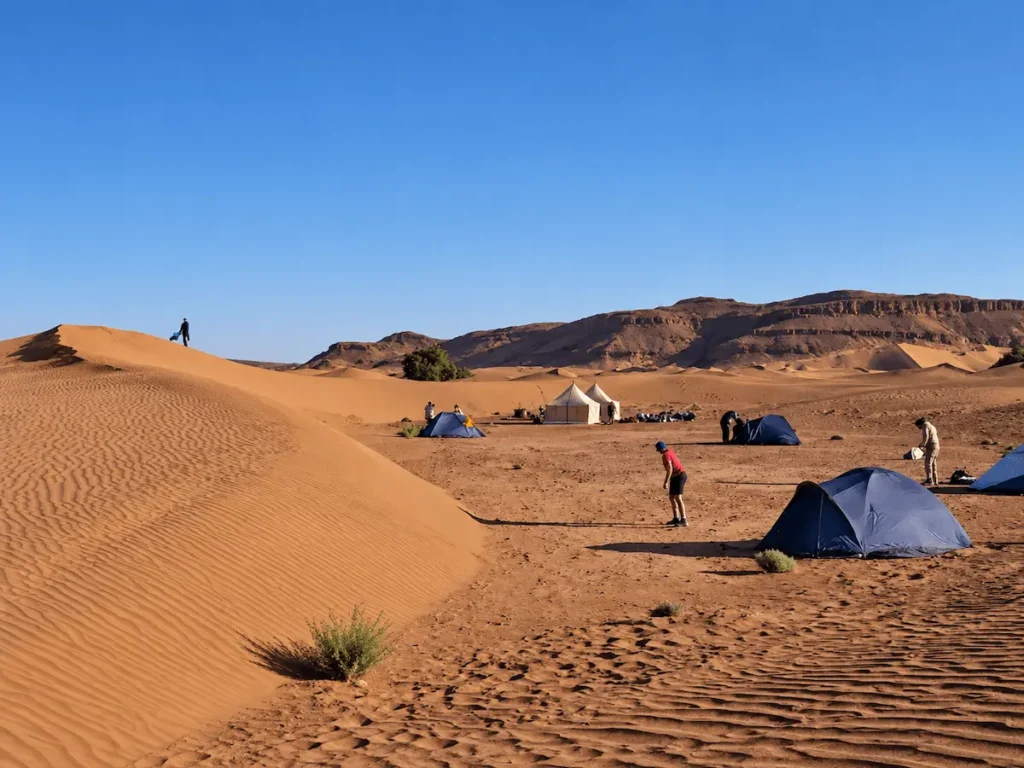
Departure from Marrakech and transfer across southern Morocco to the starting point of the Draa Valley trek, with a lunch break in Ouarzazate. Continue through the valley to meet your local guide, cook and camel-driving team. The first walking stage leads into the desert landscapes before settling into a bivouac among the dunes for your first night beneath the stars.
Day 3: Hiking through the Draa Valley – Tidri Dunes
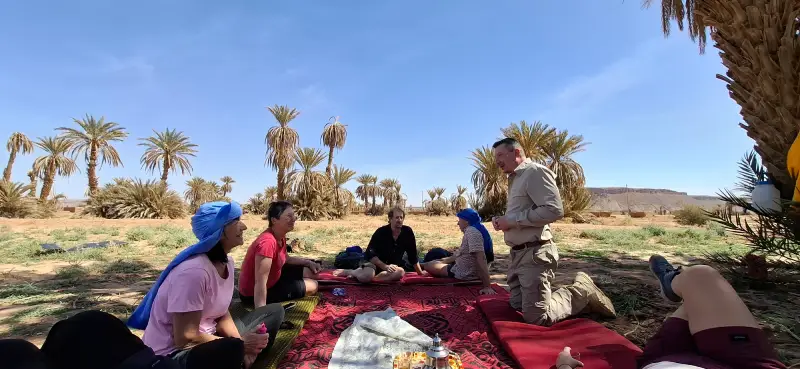
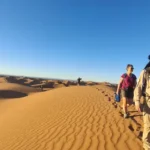
Begin your first full day of desert hiking in Morocco through palm groves, traditional mud-brick villages and the landscapes bordering the Oued Drâa. Stop for lunch in the shade of the palm trees near Zawyat Sidi Salah, then cross the riverbed and continue toward the impressive Tidri dunes, where the bivouac is set up for the night. Walking time: approximately 5h30.
Day 4: Tidri Dunes – Desert Plateau – Erg Essahel
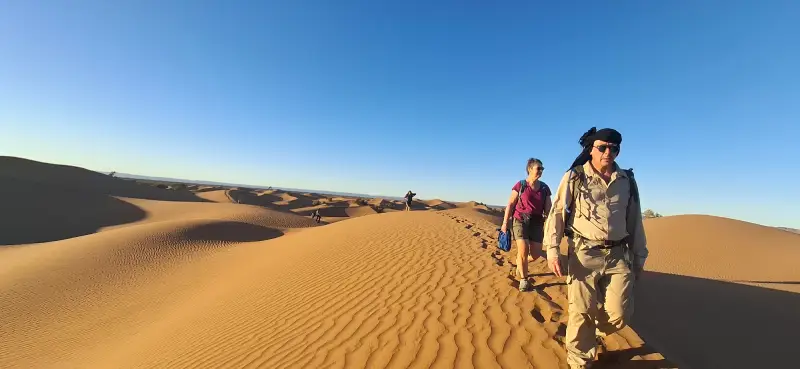
Continue deeper into the Moroccan Sahara, walking between dunes and across a vast lunar-like plateau toward Erg Essahel. After reaching the camp among the high dunes, enjoy free time to explore the surroundings or experience a short camel trek in Morocco with the local caravan team. In the evening, gather around the campfire, discover local traditions and taste traditional sand bread beneath the desert sky. Walking time: approximately 4 hours.
Day 5: Reg and Dunes – Oulad Driss Village
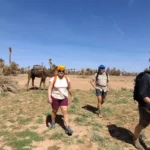
Walk across a quiet desert reg before reaching the Ergabi dunes, surrounded by wide open landscapes typical of a Moroccan Sahara trek. Lunch is served in the shade of tamarisk trees before continuing to Oulad Driss, a traditional village near M’Hamid. Spend the night in a nomadic-style camp, with the possibility of enjoying a hot shower after the day’s walk. Walking time: approximately 5h30.
Day 6: Oulad Driss – Zagora – Aït Ben Haddou
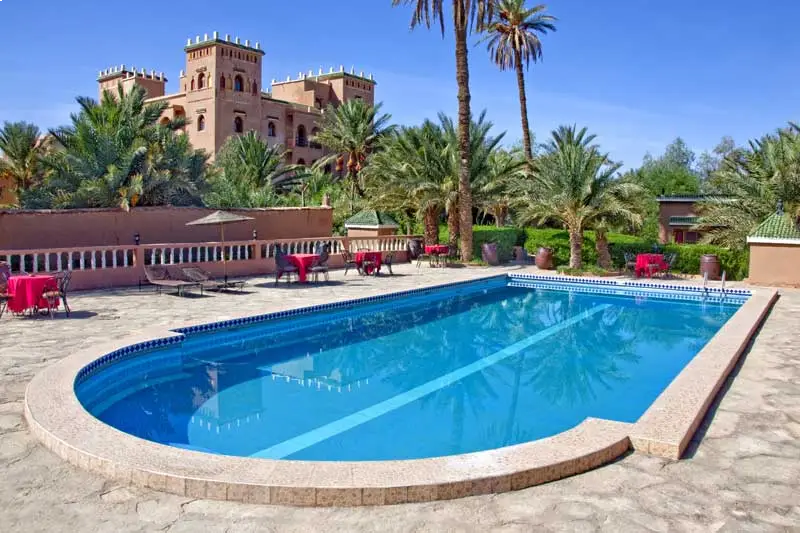
After sunrise and breakfast, say goodbye to the camel-driving team and begin the return journey through Zagora and the villages lining the Drâa Valley. Stop in Ouarzazate for lunch and some free time before continuing to the UNESCO-listed village of Aït Ben Haddou. Dinner and overnight stay at the hotel. Travel time: approximately 4 hours.
Day 7: Aït Ben Haddou – Ounila Valley – Marrakech
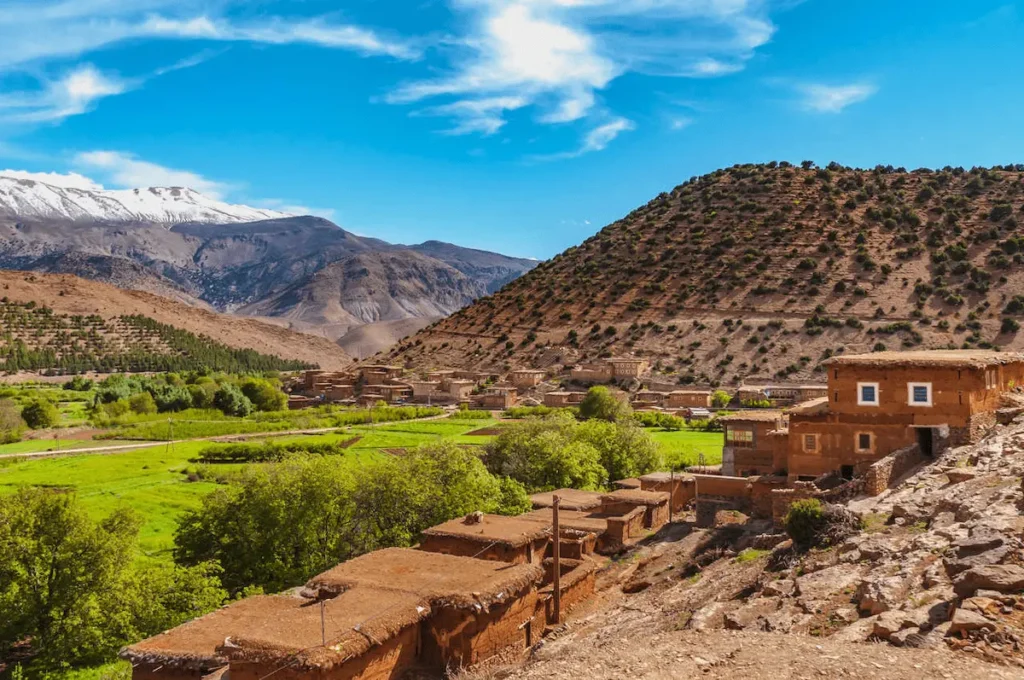
Leave Aït Ben Haddou and travel through the beautiful Ounila Valley, known for its red-earth villages, kasbahs and contrasting mountain scenery. Continue across the High Atlas toward Marrakech, arriving in the afternoon. Check into your riad and enjoy free time for the rest of the day. Travel time: approximately 4 hours.
Day 8: Departure from Marrakech
Transfer to Marrakech airport according to your flight schedule. This Draa Valley desert trek combines four days of walking with palm groves, Berber villages, dunes, camel-supported bivouacs and nights beneath the stars. It is a complete Morocco desert trek for travellers looking to experience the landscapes, traditions and peaceful atmosphere of southern Morocco.
Highlights of the Draa Valley Desert Trek – 8 Days
- Immersion in the Moroccan desert: explore the Draa Valley through palm groves, traditional villages, desert plateaus and sweeping dunes.
- Bivouac and starry nights: sleep in the dunes beneath the stars and enjoy peaceful evenings around the campfire.
- Camel trek in Morocco: travel with a traditional camel caravan and discover the desert at the gentle rhythm of the dromedaries.
- Berber culinary experience: enjoy traditional meals prepared by our local cook, including the famous sand bread baked in the desert.
- Desert hiking and Draa Valley trekking: walk through wadis, regs, dunes, palm groves and oases along varied and scenic desert routes.
- Cultural encounters: visit local villages, meet the inhabitants and discover the traditions of the camel-driving communities of southern Morocco.
- Spectacular sunsets: admire the changing colours of the dunes and the warm light of the Moroccan Sahara at the end of each day.
- Complete desert experience: combine hiking, bivouac nights, camel-supported travel, campfire evenings and cultural immersion in one journey.
Draa Valley Desert Trek – Technical Information
Recommended Period
The best period for this Draa Valley desert trek is from late October to late April, when daytime temperatures are generally comfortable for walking in the Sahara and conditions are well suited to multi-day desert trekking.
Difficulty Level
This trek is suitable for travellers in good physical condition who are comfortable walking approximately 4 to 6 hours per day. There is little elevation gain, although walking across dunes and sandy terrain can require additional effort. No heavy luggage is carried during the trek, as the main bags are transported by camels.
Luggage Transport
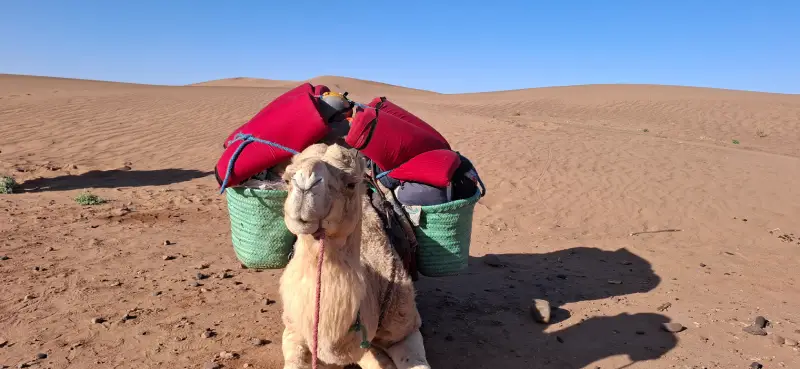
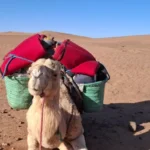
You only carry a small daypack with the belongings you need during the walk. The main luggage, camping equipment and supplies are transported by the camel caravan throughout the walking stages, allowing you to enjoy desert hiking in Morocco with a light pack.
Transportation
Road transfers are organised by tourist minibus between Marrakech and the starting and finishing points of the trek. These transfers connect the walking itinerary with the landscapes and villages of southern Morocco and the Draa Valley.
Accommodation
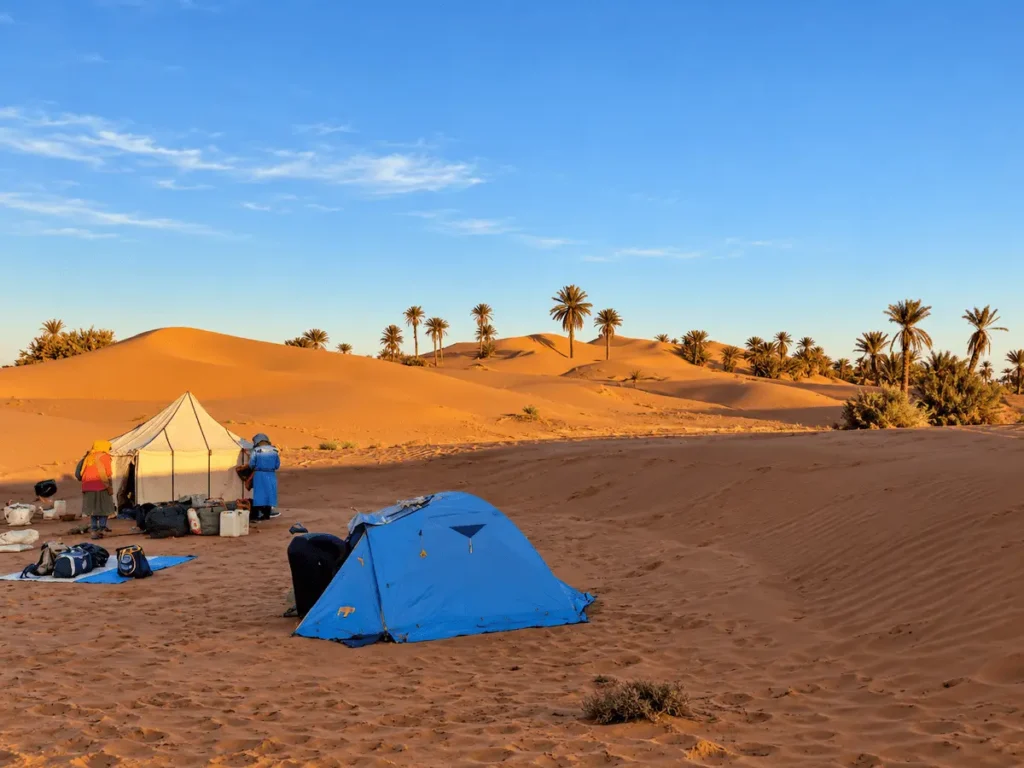
In Marrakech, accommodation is provided in a hotel or traditional riad near Jemaa el-Fna. During the Moroccan Sahara trek, nights are spent in bivouacs in the desert, with two-person tents and comfortable foam mattresses provided. The itinerary also includes an overnight stay in Aït Ben Haddou before returning to Marrakech.
Meals
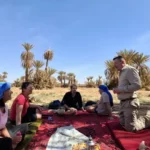
Meals during the trek are prepared by a Moroccan cook travelling with the local team. Lunch is usually served during the midday break in a shaded location, while hot meals are prepared at the bivouac in the evening. Menus typically include salads, tagines, couscous and other Moroccan dishes adapted to life in the desert.
Guide and Local Team
The trek is led by Ali, a certified Berber mountain and desert guide trained at the Tabant mountain guide training centre, and supported by experienced camel drivers and a cook. The local team manages the organisation of the walking stages, bivouacs, meals and luggage transport while sharing their knowledge of the Draa Valley, desert traditions and local communities.
Throughout this Morocco desert trek, your guide is also your main contact for questions, cultural encounters and communication with local people. This local knowledge adds an important human dimension to the journey and helps travellers better understand the landscapes and traditions of the Moroccan Sahara.
A Typical Day of Desert Hiking
A typical day begins around sunrise. After breakfast, the tents and main luggage are packed and loaded onto the camels before the walking stage begins. During the morning, regular breaks are planned for rest, photography and refreshments such as dried fruit or oranges.
At midday, the group stops in a shaded place for lunch and a longer rest before continuing through dunes, regs, palm groves or desert plateaus. The bivouac is reached before nightfall, leaving enough time to set up the tents, relax and watch the sunset while the cook prepares dinner.
The rhythm of the journey follows the traditional atmosphere of a camel trek in Morocco: walking during the cooler parts of the day, travelling with a camel caravan and spending each evening in a different desert setting beneath the stars.
Draa Valley Desert Trek Prices
Prices by Group Size
| Number of people | 2 pax | 3 to 5 pax | 5 to 8 pax | 8 to 11 pax | 11 to 14 pax | From 15 pax |
| Price per person | $900 | $860 | $790 | $750 | $680 | $610 |
Price Includes
- Arrival and departure transfers in Marrakech.
- Tourist minibus transfers to and from the starting point of the trek.
- Accommodation in Marrakech in a traditional riad or 3-star hotel on a bed-and-breakfast basis.
- An English-speaking Berber guide throughout the trek.
- Full board during the walking stages.
- Two-person igloo tents for bivouac nights in the desert.
- A comfortable foam mattress for each participant.
- Camels to transport your main luggage, equipment and supplies, allowing you to enjoy desert hiking in Morocco with only a small daypack.
- Support from experienced camel drivers, giving the journey the authentic atmosphere of a camel trek in Morocco.
- Services of a Berber cook throughout the desert stages.
- Traditional entertainment and folklore organised by our local team.
- Moroccan wine.
Price Does Not Include
- International flights.
- Travel, assistance and repatriation insurance.
- Personal expenses.
- Entrance fees to historical monuments and sites.
- Tips for the local guide, cook and camel-driving team.
- Drinks not specifically included in the program.
- Meals in Marrakech.
FAQ – Draa Valley Desert Trek (8 Days)
➤ What is the best time for a Draa Valley desert trek?
Read the answer ↓
The best period for this Draa Valley desert trek is generally from October to April, when temperatures are most suitable for walking in the Sahara.
- October and April: warm days and generally mild nights.
- November and March: pleasant daytime temperatures and cooler evenings.
- December and February: mild days with cool to cold nights.
- January: cooler days and cold nights, especially at the bivouac.
➤ How long is the Draa Valley trek?
Read the answer ↓
The complete journey lasts 8 days, including approximately 4 days of desert hiking. This allows enough time to discover palm groves, villages, regs and dunes without rushing. Travellers looking for a shorter Morocco desert trek can also discover our 5-day Morocco desert trek.
➤ How much does the trek cost?
Read the answer ↓
Prices start from $610 per person for groups of 15 or more participants. The price varies according to the number of travellers in the group.
➤ Where do we sleep during the trek?
Read the answer ↓
During the Moroccan Sahara trek, nights are spent in bivouac tents set up in the desert, with tents and foam mattresses provided. The itinerary also includes accommodation in Marrakech and a hotel stay in Aït Ben Haddou before returning to Marrakech.
➤ What is provided during the desert trek?
Read the answer ↓
- Tents and foam mattresses for bivouac nights.
- Blankets for the nights in the desert.
- Meals prepared by the local cook during the trek.
- Mineral water during the walking stages.
- Camels for transporting the main luggage and equipment.
- Support from the guide, camel drivers and cook.
➤ What are the highlights of this Draa Valley trek?
Read the answer ↓
- Mud-brick villages and palm groves along the Draa Valley.
- The dunes of Tidri and Erg Essahel.
- Walking through dunes, regs, oases and desert plateaus.
- Nights in bivouac beneath the stars.
- Campfire evenings and traditional sand bread.
- The atmosphere of a camel trek in Morocco with a local caravan team.
- Discovering the traditions of the camel-driving nomads of southern Morocco.
➤ Do I need a guide for this desert trek?
Read the answer ↓
For a multi-day journey through remote desert areas, travelling with an experienced local team is strongly recommended. Trek Maroc Aventure provides a local guide, camel drivers and a cook throughout the walking stages. Their knowledge of the terrain, water points and local communities makes the journey safer and also adds an important cultural dimension to the experience.
➤ What clothing and equipment should I bring?
Read the answer ↓
- Light, loose-fitting clothing offering protection from the sun.
- A warm layer or jacket for cold desert evenings and nights.
- A cheich or scarf for protection from sun, wind and sand.
- Comfortable walking shoes suitable for dunes and rocky terrain.
- A small daypack for water, sunscreen, camera and personal belongings.
- A hat, sunglasses and high-protection sunscreen.
➤ How are food and water managed during the trek?
Read the answer ↓
Meals are prepared by our Moroccan cook throughout the walking stages, with lunches served along the route and hot meals prepared in the evening at the bivouac. Mineral water is included during the trek and transported with the caravan, allowing you to enjoy desert hiking in Morocco without carrying your main supplies.
Discover our clients’ reviews and their unique experiences with Trek Maroc Aventure: hiking, trekking, desert tours, and Atlas adventures.